

How Epoxy Floors Handle Michigan’s Harsh Winters
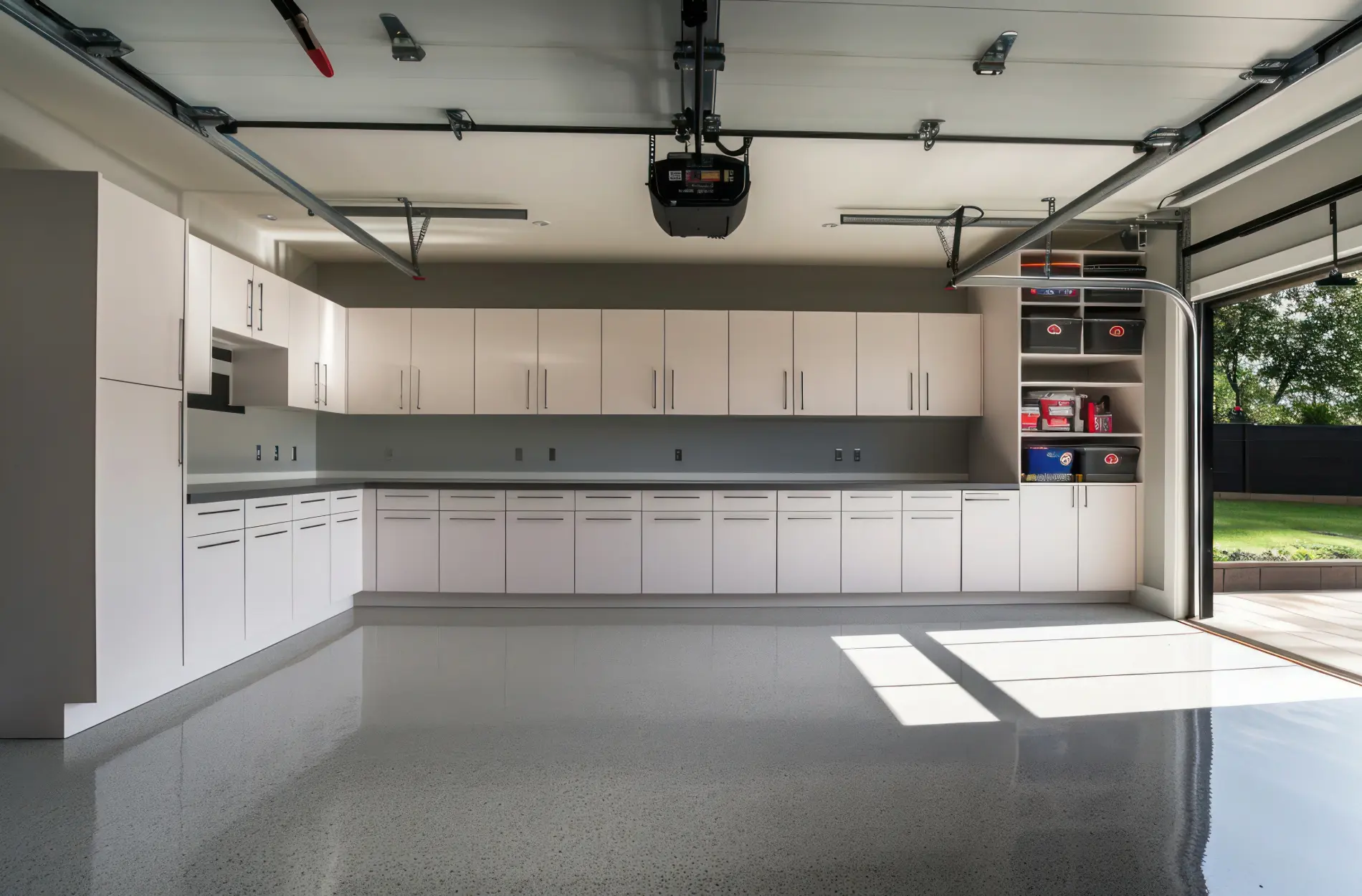
Michigan winters are hard on everything, including garage and basement floors. Temperatures drop below freezing for months at a time. Snow and ice get tracked in daily. Road salt accumulates on concrete surfaces. And freeze-thaw cycles work on unprotected floors from both above and below.
Most flooring options handle some of this. Epoxy handles all of it. That’s not marketing language. It reflects how epoxy is chemically engineered: to bond tightly to concrete and resist the moisture, salt, temperature swings, and physical stress that Michigan winters bring in on a regular basis.
This post covers exactly how epoxy performs through a Michigan winter, what threatens it, how to maintain it during the cold months, and what timing looks like if you’re considering installation before the season hits.
Why Michigan Winters Are Hard on Garage and Basement Floors
The challenge isn’t any single factor. It’s the combination.
Road salt is the first problem. Michigan uses it heavily from November through March. Every vehicle that enters a garage or facility brings salt in on its tires. That salt is corrosive. On bare concrete it accelerates surface degradation. On coated floors, it sits until it’s cleaned up. The longer it stays, the more it works at the surface.
Freeze-thaw cycling is the second problem. Concrete is porous. Water infiltrates from below through the slab and from above through moisture tracked in. When that moisture freezes, it expands. When it thaws, it contracts. Over time, that cycling breaks down unprotected concrete and causes coatings with poor adhesion to delaminate from the surface.
Moisture and condensation come third. During temperature transitions, particularly when a cold garage warms up suddenly, condensation forms on concrete surfaces. Trapped beneath a coating with inadequate moisture vapor management, that condensation can cause bubbling and adhesion failure.
A professionally installed epoxy system addresses all three. The coating creates a sealed, non-porous surface that road salt cannot penetrate, that moisture cannot work beneath, and that bonds tightly enough to the concrete substrate to resist the pressure freeze-thaw cycling creates.
How Epoxy Floors Perform in Cold Michigan Conditions
Salt and chemical resistance. Epoxy is chemically resistant to the chloride compounds in road salt, as well as the oils, hydraulic fluids, and cleaning agents common in garage environments. Salt tracked in on tires sits on the surface rather than working into it. A quick wipe or mop removes it without leaving residue or causing damage.
Moisture resistance. The epoxy coating creates a continuous, non-porous layer over the concrete. Snow and ice melt that would otherwise seep into bare concrete sits on top of the coating where it can be managed. This also prevents the efflorescence and surface staining that untreated concrete develops over Michigan winters.
Temperature tolerance. Cured epoxy remains stable across the temperature range a Michigan garage experiences, from sub-zero cold to summer heat. It does not become brittle in cold or soft in heat at normal ambient temperatures. The coating stays bonded and intact through the season.
Traction in wet conditions. A properly finished epoxy floor includes texture or aggregate in the topcoat that maintains grip even when wet from snowmelt or rain tracked in from outside. This is particularly relevant near garage doors and entry points where moisture concentrates.
Durability under load. Vehicles, equipment, and foot traffic do not change through winter. Epoxy handles the same mechanical load year-round without the degradation that softer floor coverings experience when wet and cold.
What Can Threaten an Epoxy Floor in Winter
Epoxy is durable, but it is not indestructible. Understanding the conditions that create risk helps you protect the investment.
Heavy salt accumulation left uncleaned. Salt that sits on an epoxy surface for extended periods can work at the topcoat over time, particularly at any micro-scratches or worn areas. Regular cleaning during the winter months prevents buildup from becoming a problem.
Sharp metal edges and heavy impact. Ice scrapers, snow shovels, and heavy tools dropped on the floor can chip or scratch epoxy. Using plastic shovels and tools near the floor surface avoids most of this damage.
Condensation under the coating. This is a pre-installation risk more than a post-installation one. If epoxy is applied over concrete with high moisture vapor emission, condensation can build beneath the coating and cause delamination. A professional installer tests moisture levels before application and addresses them if needed. A floor installed correctly does not develop this problem after the fact.
Extreme point loads. Floor jacks, stands, and concentrated heavy equipment can stress the coating at contact points over time. Using protective pads under jack stands reduces this risk.
Winter Maintenance for Epoxy Garage Floors in Michigan
Maintaining an epoxy floor through a Michigan winter is straightforward. The coating is designed for low maintenance, and the habits that protect it take very little time.
Clean salt off regularly. Use warm water and a mild soap or pH-neutral cleaner every week or two during heavy salt season. Avoid harsh chemical cleaners, ammonia-based products, and anything abrasive. Salt left on the surface for weeks at a time is the main thing to avoid.
Keep a weather strip along the garage door. A tight seal along the bottom of the garage door reduces the amount of cold air, moisture, and debris entering. This keeps conditions inside more stable and reduces the volume of salt and meltwater hitting the floor.
Use entry mats near the garage door. A mat just inside the garage door catches a portion of the salt, grit, and moisture coming off tires and boots before it spreads across the floor.
Avoid storing wet gear directly on the floor. Boots, wet clothing, and dripping equipment left on the floor create prolonged moisture contact in one spot. A boot rack or tray keeps the floor underneath dry.
Address chips and scratches promptly. Small surface damage left unrepaired gives moisture a point of entry. Minor chips can be addressed with touch-up kits. Larger areas should be evaluated by a professional.
The Best Time to Install Epoxy Floors in Michigan
Timing matters for epoxy installation. The coating requires specific temperature and humidity conditions to cure correctly.
The ideal installation window in Michigan runs from late spring through early fall, when ambient temperatures are consistently above 50 degrees Fahrenheit and humidity is manageable. This gives the coating the conditions it needs to bond properly to the concrete and cure to full hardness.
Installing epoxy as winter approaches narrows the window. Once temperatures drop consistently below 50 degrees, curing is affected, particularly near garage doors and exterior walls exposed to cold air infiltration. Early December is realistically the last point in the season where installation is feasible in most Metro Detroit garages.
If a floor needs epoxy and the timing is late in the year, the better approach is usually to wait for spring rather than rush an installation in marginal conditions. A coating applied under poor conditions will not perform as well or last as long as one installed correctly.
For floors being planned ahead of next winter, late spring is the optimal window. The coating has the entire summer to cure fully and harden before cold weather arrives.
Epoxy Floor Installation in Metro Detroit
Armor Tough Coatings installs epoxy floors for residential garages, basements, and commercial spaces throughout Metro Detroit, including Auburn Hills, Bloomfield Hills, Birmingham, Clarkston, Novi, Rochester Hills, and Sterling Heights.
Every installation starts with concrete preparation, including diamond grinding and moisture testing, to ensure the coating bonds correctly and performs through Michigan’s seasonal extremes. We back our work with warranty coverage and a satisfaction guarantee.
Contact Armor Tough Coatings to schedule a free estimate for epoxy flooring in Metro Detroit.