

Painted vs. Stained Cabinets: How to Choose the Right Finish
You’ve decided to refinish your cabinets. Now comes the second decision: paint or stain. Both are legitimate options. Both produce beautiful results. But they produce fundamentally different results — and choosing between them isn’t about which finish is better. It’s about which finish is right for your kitchen, your cabinets, and what you actually want to walk into every morning.
If you’re still working through whether cabinet refinishing is the right path for your kitchen at all, that’s worth sorting out first. But if you’re ready to move into finish selection, here’s what you need to know.
What Painted Cabinets Actually Look Like
Paint covers the wood completely. The grain disappears. What you get is a smooth, uniform surface with consistent color from door to door and cabinet box to cabinet box.
That uniformity is exactly the point. A painted finish gives you:
- A clean, polished aesthetic with no natural variation or color shifts
- Complete control over the look — the design direction is set entirely by the color you choose
- A smooth, almost factory-like surface quality with no grain texture
Any color is available with paint. White, cream, navy, sage, charcoal, matte black, or a custom match to a specific swatch — paint accommodates all of it. The wood underneath becomes irrelevant to the final appearance.
What Stained Cabinets Actually Look Like
Stain works differently. It penetrates the wood and enhances its natural color while leaving the grain fully visible. The result has texture, depth, and variation that paint cannot replicate.
What a stained finish delivers:
- Warmth and character that comes from the wood itself
- Natural variation — no two stained cabinets look exactly alike
- A sense that the material is real, not covered over
Stain colors work within the natural wood spectrum. Lighter options include honey, natural, and golden tones. Darker options include walnut, espresso, and ebony. You cannot achieve sage green or navy blue with stain — the color range is tied to what the wood can absorb and enhance.
Natural inconsistencies in the wood — grain pattern, mineral streaks, slight color variation — all show through stain. For many homeowners that’s the appeal. For others it’s worth knowing before committing.
How the Two Finishes Compare
Now that both are defined, here’s how they stack up across the four dimensions that matter most.
Color Range and Visual Options
Paint gives you unlimited color choice. The finish is consistent and predictable regardless of what the wood looks like underneath. You pick the color, and that’s what you get.
Stain is constrained by the wood. You can go lighter or darker than the original tone, but the result always reflects the species and grain underneath. The final color varies based on the wood and how it absorbs the stain.
The practical distinction: if a specific color drives your design direction, paint is the only path. If showcasing the wood matters more than hitting a precise color, stain is the right choice.
Durability and How Wear Shows
Both finishes use a protective topcoat, so raw durability is comparable. The difference is in how each finish shows damage.
Paint chips. When a painted surface gets nicked, the chip reveals the wood or primer underneath in a color that contrasts sharply with the surface. The damage shows clearly.
Stain wears differently. Scratches and scuffs blend into the surrounding grain rather than creating a sharp contrast. Minor damage is far less visible on a stained surface.
For busy kitchens, households with young children, or cabinets that take regular impact, stain is more forgiving. Paint requires more vigilance to stay looking right.
How Each Finish Ages Over Time
Painted cabinets look pristine when new. Over time they show age through chips near handles, hairline cracks where doors expand and contract seasonally, and discoloration in high-touch areas. The aging is visible and concentrated.
Stained cabinets age more gradually. The grain helps disguise minor wear, and the cabinets develop a gentle patina over time. Many homeowners find this appealing rather than problematic.
One thing worth knowing about specific wood species: cherry darkens significantly with age and UV exposure. Walnut lightens slightly. These shifts are natural to the wood and happen regardless of the stain applied. If you’re drawn to a specific stained tone, a professional can show you how that species changes over time.
Maintenance and Touch-Ups in Practice
Painted cabinets need more active attention. Light colors show grease and fingerprints quickly. High-traffic areas around handles and pulls need regular wiping down.
Touch-ups on painted cabinets are also harder. Matching the exact color and sheen of the original finish is difficult — color shifts slightly between batches, and touched-up spots often look slightly different from the surrounding surface.
Stained cabinets are easier to maintain day to day. The grain hides fingerprints and minor dirt better than paint. Touch-ups are simpler too — a stain marker in a matching color blends into the surrounding grain almost invisibly.
The practical implication: stain is lower maintenance in daily use and easier to repair when damage occurs.
How Your Cabinet Material Affects the Decision
Not every wood suits both finishes equally well. The material your cabinets are made of is a real factor in which finish produces the best result.
Woods that suit paint: tight-grained species like maple and birch produce the smoothest painted surface. Their grain is fine enough that paint covers it completely without texture showing through. These are the preferred species for painted cabinet work.
Woods that suit stain: open-grained species with strong, attractive grain patterns — oak, cherry, walnut, hickory — show beautifully under stain. The grain becomes the visual feature the finish is built around.
Two things worth knowing for the refinishing context specifically. First, many homeowners don’t know exactly what species their cabinets are made of. A professional can identify the material and advise which finish will produce the best result. Coarse-grained wood painted over an existing finish can show grain texture through the new coat if preparation isn’t handled correctly.
Second, some cabinet doors and drawer fronts are MDF rather than solid wood. MDF takes paint well and produces a smooth, stable surface. It cannot be stained. If any components in your kitchen are MDF, paint is the only option for those pieces.
How Your Kitchen’s Style Factors In
Finish choice and kitchen style are closely connected. Each finish suits certain design directions better than others.
Paint tends to work well with:
- Modern and contemporary kitchens — clean lines, minimal hardware, and solid color reinforce each other naturally
- Transitional kitchens — painted cabinets in classic colors like cream, soft white, or navy deliver a timeless, polished look
- Any kitchen where a specific color drives the design
Stain tends to work well with:
- Traditional, craftsman, and rustic kitchens — the warmth and grain visibility of stained wood suits spaces built around natural materials
- Kitchens aligned with current natural material trends — lighter stained tones in natural oak or white oak fit the move toward organic textures and warm neutrals
Your countertops and flooring matter too. A kitchen with cool gray stone and light flooring reads differently with painted versus stained cabinets. A professional can look at the full space and advise which finish connects the room rather than working against it.
Can You Use Both in the Same Kitchen?
Yes. Combining finishes is a legitimate option in a refinishing context, and it works well when done intentionally.
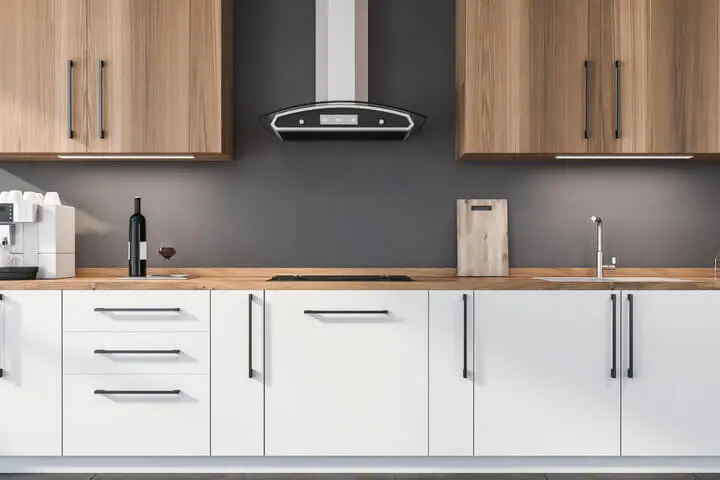
The most common approach is painted perimeter cabinets with a stained wood island. The painted cabinets provide visual consistency across the walls while the stained island becomes a focal point with its own character. Other combinations include painted uppers with stained lowers, or a stained kitchen with a painted range hood surround.
The key is making sure the paint and stain tones complement each other. A warm wood stain pairs naturally with warm whites or creams. A cooler-toned stain works better alongside gray or cooler paint colors.
Combining finishes does add complexity to the project. Not every kitchen layout makes it practical. It’s worth discussing with a professional before committing to the approach.
When to Choose Paint
Paint is the right choice when:
- A specific color drives the design — if you have a color in mind that stain can’t achieve, paint is the only path
- The cabinets are maple, birch, or contain MDF components — these materials suit paint and will produce a clean, smooth result
- The kitchen style is modern, contemporary, or transitional — paint’s uniformity fits these directions naturally
- You want a complete visual reset — covering the existing wood and starting fresh with a new color is exactly what paint does
Go into painted cabinets knowing they require more maintenance. Chips will be more visible, touch-ups are harder to match, and high-traffic areas need regular attention.
When to Choose Stain
Stain is the right choice when:
- The wood itself matters — if the cabinets are cherry, walnut, oak, or another species with strong grain character, stain lets that show rather than covering it
- The kitchen style is traditional, craftsman, rustic, or aligned with natural material trends — stained wood suits these directions better than paint
- Durability and ease of maintenance are priorities — the grain hides everyday wear, touch-ups are simpler, and the finish ages more gracefully over time
- Wood character matters more than color flexibility — if the warmth and variation of natural wood is what appeals to you, stain is the only finish that delivers it
Note the limitation: stain cannot achieve every color, and the result depends on the wood species. If you’re drawn to a specific stained tone, a professional can assess whether your cabinets will produce that result.
The Right Finish Starts with the Right Assessment
Paint and stain are not better or worse than each other. They produce different results and suit different kitchens. The right choice depends on the wood, the style, and what you want to walk into every day.
If you’ve worked through the dimensions in this blog and have a clearer sense of which direction fits your kitchen, the next step is confirming that choice against your actual cabinets. A professional can identify your cabinet material, look at the full kitchen, and advise on which finish will produce the result you’re after.
For homeowners who are also weighing whether to refinish or reface, the differences between those two approaches are worth understanding before this finish conversation happens — the two services solve different problems and the right path affects which finish options are even available to you.
Contact us to schedule a free consultation. We’ll assess your cabinets, walk through your kitchen, and help you make the right call for your specific space.